

How to Prepare Your Site for an Official Commercial Land Valuation
Picture a vacant commercial block on the edge of a growth corridor. The valuer arrives on inspection day and finds a padlocked gate. Nobody has the survey plan, and no one is sure whether the development approval is still current. The inspection gets rescheduled, the report comes back loaded with assumptions, and settlement starts to drift.
It’s frustrating, and it’s usually avoidable. A commercial land valuation is only as reliable as the information behind it. Knowing how property values are assessed can help owners understand why documents, approvals and site details are important during the valuation process. Vacant and under-developed sites don’t have a building to speak for them. The value sits in the zoning, the title, the approvals and what the land can realistically be used for.
This guide covers what to organise before the valuer visits, what they’ll look for on site, and the mistakes that tend to cause delays.
Summary
An official commercial land valuation is an independent, written opinion of market value prepared by a qualified valuer. Lenders, buyers, courts, accountants and the ATO can rely on it.
The valuer can only work with what they can verify. Before the inspection, gather your title documents, survey, planning and zoning information, approvals, and any environmental or servicing reports. On the day, make sure the valuer can get onto the site, find the boundaries and see the land as it really is.
Be upfront about the purpose of the valuation, the valuation date and any known constraints such as easements, flooding or contamination. Don’t confuse a market valuation with a council rates notice, a state government land value or an agent’s appraisal. Good preparation means fewer assumptions in the report, fewer delays and a valuation that holds up when someone else relies on it.
What Is a Commercial Land Valuation?
A commercial land valuation is a formal, written opinion of what a piece of land would sell for on the open market at a specific date. It applies to land zoned or used for business purposes: retail, offices, warehouses, light industrial, mixed-use, or a development site waiting on approvals.
“Official” generally means the report is prepared by a suitably qualified, independent valuer working to recognised valuation standards, including the Australian Property Institute’s professional practice standards. It’s written so a third party, such as a bank, court or accountant, can rely on it.
It isn’t the same as:
- An agent’s appraisal. That’s a sales opinion, not a formal valuation.
- A government land value. State valuers-general issue these for council rates and land tax. They’re not a market valuation.
- A desktop estimate. This is a quick figure without an inspection or full analysis, and most lenders and courts won’t accept it.
How valuers approach vacant and commercial land
Two methods do most of the work:
- Direct comparison. The valuer looks at recent sales of similar land and adjusts for size, location, zoning, shape, access and timing.
- Residual (hypothetical development) method. If the site has development potential, the valuer estimates the completed value of a realistic project. They then subtract construction costs, professional fees, holding costs, GST and a developer’s margin. What’s left is roughly what a buyer could pay for the land.
Both rest on the site’s highest and best use. That means the most valuable use that’s legally permissible, physically possible and financially feasible. Understanding what determines a site’s market potential can help owners provide the right evidence about zoning, development opportunities and future use.
Why Preparation Makes a Difference
When information is missing, a valuer has three options. They can chase it, which costs time. They can make a stated assumption, which usually leans cautious. Or they can qualify the report, which can make it less useful to a lender or the other party.
Preparation doesn’t influence the number. Valuers have to be independent, and you shouldn’t ask for a figure. What preparation does is stop the valuer guessing about things you could have documented.
Gather the Core Documents Before the Inspection
Start with the paperwork. Here’s what to pull together and what each item tells the valuer:
| Document | What it tells the valuer |
| Certificate of title and title plan | Ownership, land area, easements, covenants, caveats |
| Survey or identification survey | Boundaries, dimensions, encroachments, levels |
| Zoning and planning information | Permitted uses, height and floor space limits, overlays |
| Development approvals and modifications | What’s been approved, conditions, whether it’s still current |
| Leases, licences and site agreements | Car parking, billboards, telecommunications, grazing or storage arrangements |
| Environmental, geotechnical and flood reports | Contamination risk, soil conditions, flood and drainage constraints |
| Servicing information | Water, sewer, power, gas and telecommunications availability |
| Rates and land tax notices | Land area and the government land value (for reference only) |
| Previous valuations and purchase contract | History and context |
Planning documents differ by state
Planning documents vary across Australia. In NSW, a NSW planning certificate information under section 10.7 of the Environmental Planning and Assessment Act 1979 sets out zoning and planning controls affecting the land. Other states and territories have their own equivalents, often called planning property reports or planning certificates. Zone names differ by state, and NSW overhauled its commercial and industrial zones in late 2022. A certificate that predates the change is worth refreshing.
Development approvals and feasibility work
If you hold a development approval, give the valuer the notice of determination, the approved plans and any modifications. Check whether it’s still active. Approvals can lapse if work doesn’t commence within the time allowed, and the rules differ between states.
Feasibility studies, quotes or pre-lodgement advice from council can help too. The valuer will test them against market evidence rather than accept them at face value.
GST and the valuation
GST can change the numbers on commercial land sales. Ask your accountant or solicitor whether GST applies and whether the margin scheme or a going concern exemption is in play. Tell your valuer what you know, and check whether the report is stated as GST-inclusive or exclusive.
Get the Site Ready for the Valuer’s Visit
The inspection is where the valuer confirms what the documents say. A few practical steps go a long way.
Sort out access and safety
- Arrange keys, gate codes and vehicle access in advance.
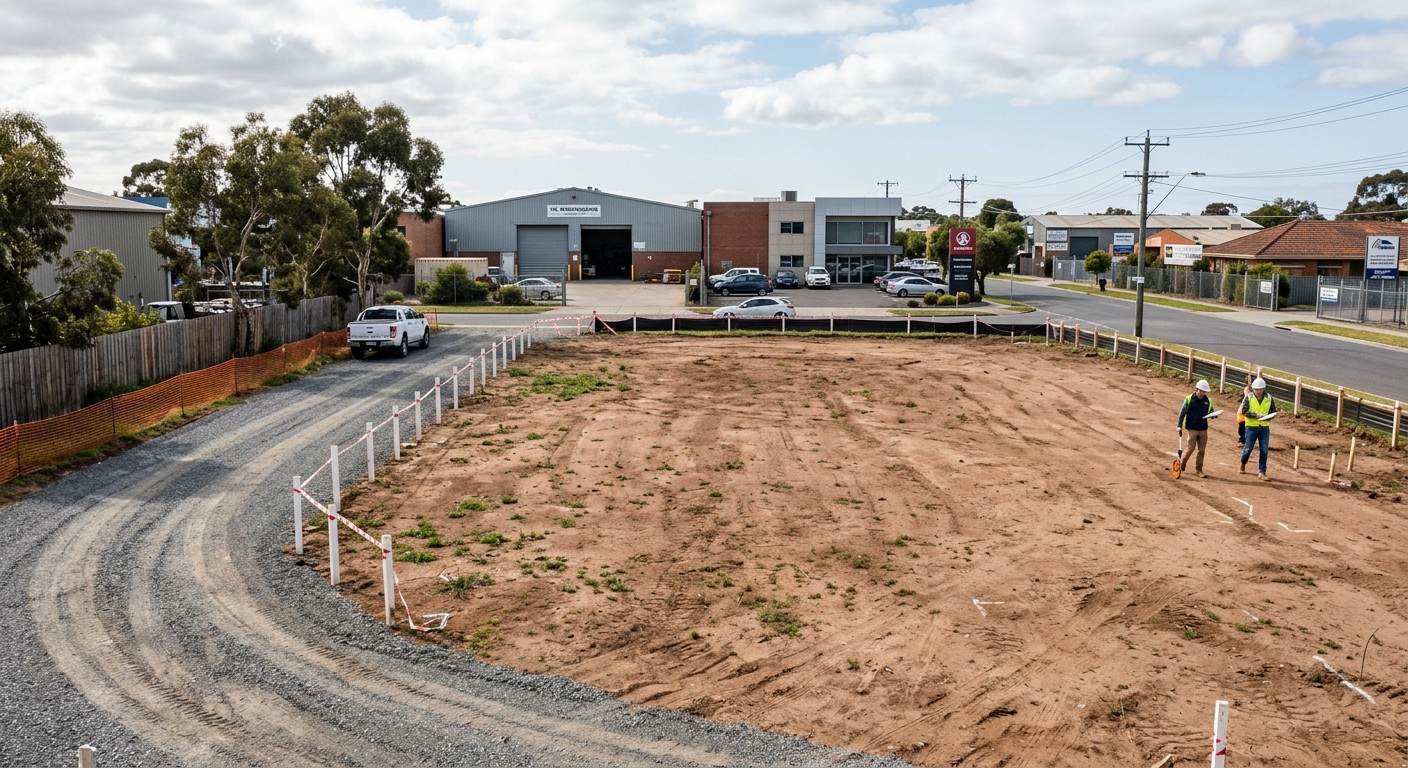
- Slash long grass and clear overgrowth that hides boundaries, drainage lines or fences.
- Let the valuer know about hazards such as unstable ground, stockpiles, open excavations or livestock.
- Have someone on site who knows the land, particularly if it’s large or irregular.
Make the boundaries easy to find
Peg lines or survey marks help, especially on vacant land where fences may not follow the title boundary. If the valuer can’t confidently identify the boundaries, the report may need to be qualified.
Point out existing structures and works
Tell the valuer about old sheds, fill, retaining walls, tracks, dams, underground tanks, or any earthworks. Some add value, and some are liabilities that need removing or remediating.
Don’t tidy away the problems
It’s tempting to make a site look its best, but hiding a drainage issue or a patch of dumped fill doesn’t help. A valuer who finds a problem mid-inspection, or a lender who finds it later, will lose confidence in the whole file. Disclose known issues up front.
Explain Zoning and Development Potential
Zoning is usually the biggest driver of commercial land value. A 5,000 square metre site zoned for light industry in Western Sydney and a similarly sized parcel in a regional town can sit in different value brackets even when they look alike on the ground.
The valuer will check:
- Permitted uses. What can be built without special approval, and what needs consent.
- Development controls. Height limits, floor space ratios, setbacks and minimum lot sizes.
- Overlays and constraints. Flood planning levels, bushfire-prone land, heritage, biodiversity or native vegetation, acid sulfate soils, airport noise, and easements for power or drainage.
Rezoning hopes versus rezoning evidence
If you think the land might be rezoned, say so, but provide evidence. A gazetted planning proposal, a strategic plan identifying the area for change, or a council resolution carries weight. A general belief that the area will grow generally doesn’t. Valuers are cautious about giving full weight to a rezoning that hasn’t happened.
Tell the Valuer the Purpose and the Valuation Date
The same site can be valued differently depending on why the valuation is needed. Be clear about:
- The purpose. Finance, a sale or purchase, capital gains tax, stamp duty, family law, an estate, an SMSF, or compulsory acquisition.
- Who will rely on it. The report is addressed to a particular client, and others may not be able to use it.
- The valuation date. A current valuation is different from a retrospective one, such as for CGT purposes.
If it’s for a loan, check with the lender first. Many lenders instruct valuers from their own panel and may not accept a report you’ve commissioned yourself. If it’s for court, ask your solicitor whether an expert witness report is required, as that’s a different type of report with its own rules.
Common Mistakes and Misconceptions
- Treating the council or state land value as market value. It’s an assessment for rates and tax, not a sale price.
- Assuming an old approval still counts. It may have lapsed or been overtaken by new planning controls.
- Forgetting easements, covenants or contamination. These can cut the usable area or the range of feasible uses.
- Leaving out leases or informal arrangements. A handshake licence for storage or grazing can still affect the valuation.
- Expecting the valuer to fill the gaps. They can only value what’s in front of them and what they can verify.
FAQs
How much does a commercial land valuation cost?
Fees depend on the size and complexity of the site, the purpose of the valuation and how quickly you need it. Vacant land with straightforward zoning is generally simpler than a development site needing a residual analysis. Ask for a written fee quote before you engage a valuer.
How long does a commercial land valuation take?
It varies. A complex site with development potential takes longer than a standard residential valuation because of the research involved. Missing documents are one of the most common causes of delay, so ask the valuer for a realistic turnaround and provide your paperwork early.
Do I need to be at the inspection?
Not always, but someone who can provide access and answer questions about the land should be there. That could be you, a site manager or your agent.
What’s the difference between a market valuation and my government land value?
A market valuation estimates what the land would sell for on the open market at a specific date. A state government land value is used for council rates and land tax and is calculated on a different basis. The two figures often differ.
Does having a development approval increase the value of land?
Often it does, because it reduces uncertainty and lets a buyer see what can be built. But the valuer will check that the approval is current, that the project is feasible in today’s market, and that the approved use suits the location.
Can I use an old valuation?
A valuation is only accurate at its valuation date. Lenders and other parties usually set their own rules about how recent a report must be, so check with whoever will rely on it.
Who can carry out an official commercial land valuation in Australia?
Look for a qualified, independent valuer with relevant commercial experience, ideally with membership of the Australian Property Institute and Certified Practising Valuer status. Registration and licensing requirements for valuers differ across states and territories, so ask about the valuer’s qualifications and registration where your state requires one.
Conclusion
A commercial land valuation rewards preparation. Organise your title, survey, planning and environmental documents, make the site easy to inspect, and be upfront about the valuation’s purpose and any known constraints.
Valuers can only assess what they can verify, so complete information leads to a clearer, more defensible report and fewer delays when the report goes to a lender, buyer or adviser.
Need Help With a Commercial Land Valuation?
If you need a commercial land valuation for finance, a sale or purchase, tax or legal purposes, Local Property Valuers can talk you through what your site will need before the inspection. Call +61 438 080 786 for a straightforward conversation about your land and the type of report you require.